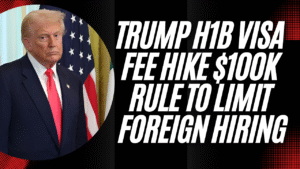
In a major Trump H1B visa policy shift, US President Donald Trump has announced a sweeping executive order raising the H1B visa fees to $100,000 annually per employee. This marks a dramatic jump from the current $1,000 fee and is being positioned as a move to protect American jobs.
Standing alongside Trump in the Oval Office, Secretary of Commerce Howard Lutnick explained:
“No more will these big tech companies train foreign workers. They’ll have to pay the government $100,000, then they have to pay employees, so it’s just non-economic.”
According to Lutnick, the new H1B rules aim to prioritize recent American graduates over foreign workers, discouraging companies from bringing in talent from abroad.
Trump’s Executive Orders and H1B Proclamation
The Trump executive orders today not only introduced the massive H1B application fee but also directed the Department of Labor to tighten eligibility. The revised H1B proclamation will ensure that only “high-value” roles qualify, limiting the use of visas for lower-cost labor.
“Train Americans, stop bringing in people to take our jobs,” Lutnick stressed.
Trump backed these comments, insisting that Big Tech loves it and is fully on board. He also hinted at a proposed Trump Gold Card program, saying major corporations are aligned with the White House’s new immigration approach.
Impact of the $100K H1B Visa Fees
This H1B news is expected to reshape how companies hire skilled workers. The annual fee will drastically cut usage of the visa for junior or mid-level roles, making it financially feasible only for top-tier positions.
However, legal experts question the legality of such a steep administrative fee, since US law typically limits fees to cover only processing and enforcement. Still, the Trump administration argues the move is within presidential powers on immigration.
For now, questions remain on how the new rules will apply to current H1B visa holders, renewals, and whether exceptions will exist. But one thing is clear: this change could significantly alter the landscape of foreign skilled worker hiring, especially in the tech and IT industries that rely heavily on Indian professionals.